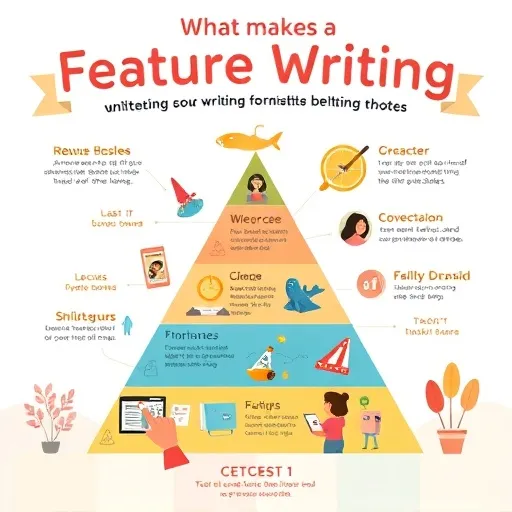
Feature story narrat
What Makes Feature Writing Different From Other Formats?
A feature story doesn't follow the inverted pyramid that hard news writing relies on. It doesn't front-load the most critical fact and then trail off into nothing. Instead, it breathes. It builds. It uses narrative tension, character development, and scene-setting to pull readers through a much longer piece of content. That's the first thing you need to understand before diving into any collection of feature writing tips — this format operates by its own rules.
Here's a simple way to think about it: a news brief tells you what happened. A feature article tells you why it matters, who it happened to, and what it felt like to be there. That distinction shapes everything about how you approach the craft, and it's the foundation that every solid set of feature writing tips is built on.
This is exactly why feature writing remains one of the most valuable skills in content marketing and editorial work. It humanizes topics that could otherwise feel painfully dry — think industry reports, technical breakthroughs, or cultural shifts. A skilled feature writer can take something abstract and turn it into a story with a pulse. The best feature writing tips always circle back to this core principle: story first, everything else second.
Why Narrative Structure and Storytelling Techniques Set Feature Articles Apart From News Writing and Blog Posts
The biggest difference comes down to structure and pacing. News articles prioritize information delivery — they want to get you in and out fast. Blog posts often lean on listicles, how-to guides, or SEO-driven formatting that prioritizes scannability over immersion. Feature writing? It slows things down on purpose. It layers details, builds tension, and creates an emotional arc that carries the reader from beginning to end.
Here are the key distinctions that feature writing tips consistently highlight:
- Narrative arc vs. information hierarchy — features tell a story with a beginning, middle, and end, not just a ranked list of facts
- Character-driven vs. topic-driven — features anchor abstract ideas in real human experience
- Voice and tone vs. neutral reporting — features allow (and expect) a distinctive writer's voice
- Scene-setting vs. summary ledes — features drop you into a moment instead of summarizing it
- Length and depth vs. brevity — features earn their word count through layered storytelling
These aren't just stylistic preferences. They reflect how human brains actually process information. We're wired for narrative, not data dumps. That's why the most effective feature writing tips always emphasize storytelling over information stuffing.
How Feature Writing Tips Help You Master Creative Nonfiction, Longform Journalism, and Brand Storytelling
Whether you're writing for a magazine, a brand blog, or a digital publication, the same principles apply. Feature writing tips aren't just for journalists — they're for anyone who wants to create content that actually resonates. Content marketers, copywriters, brand strategists, and editorial teams all benefit from understanding how narrative structure and storytelling techniques work.
The reason is simple: audiences are bombarded with content every single day. Most of it is forgettable. The pieces that stick are the ones that make people feel something. Great feature writing tips will always tell you to prioritize emotional resonance over keyword stuffing — because engagement follows emotion, not algorithmic tricks.
Consider this: a product launch can be covered as a press release (dry, factual, forgettable) or as a feature story about the team that spent three years building it, the failures they hit along the way, and the moment everything finally clicked. Same information. Completely different impact. That's the power of applying solid feature writing tips to any format.
Why Feature Writing Tips Matter More Than Ever in 2026's Content Landscape
In 2026, the content landscape is more crowded than ever. AI-generated articles flood every platform. Social media feeds refresh every few seconds. Attention spans are shorter than ever. In this environment, feature writing tips that emphasize originality, human perspective, and genuine storytelling aren't just nice to have — they're essential for standing out.
Modern search engines have gotten dramatically better at understanding search intent and topical depth. They don't just reward keyword density anymore; they reward content that genuinely satisfies a reader's curiosity. Which is... exactly what great features do. The most forward-thinking feature writing tips in 2026 all point in the same direction: write for humans first, and the rankings will follow.
So instead of obsessing over keywords, focus on semantic richness — covering your topic thoroughly with related terms, synonyms, and natural variations. Focus on structure that's scannable and paragraphs that are digestible. Focus on originality and firsthand experience that no AI tool can replicate. These are the feature writing tips that will actually move the needle when algorithms shift and platforms change.
The Core Feature Writing Tips That Separate Memorable Stories From Forgettable Content
At the end of the day, all the best feature writing tips boil down to a few enduring principles. Find a real story — not just a topic. Tell it with care and craft. Structure it with intention. Respect your reader's time and attention. Whether you're writing a 3,000-word narrative nonfiction piece or a 1,200-word brand feature, these feature writing tips apply across the board.
The format may evolve. The platforms will definitely change. But the core principles of great feature writing — narrative tension, character, scene-setting, voice, and structure — remain constant. Master those, and you'll be equipped to tell stories that resonate, no matter what the content world throws at you next.